
Can AI Tell Your Story?
Here’s What I’ve Learned
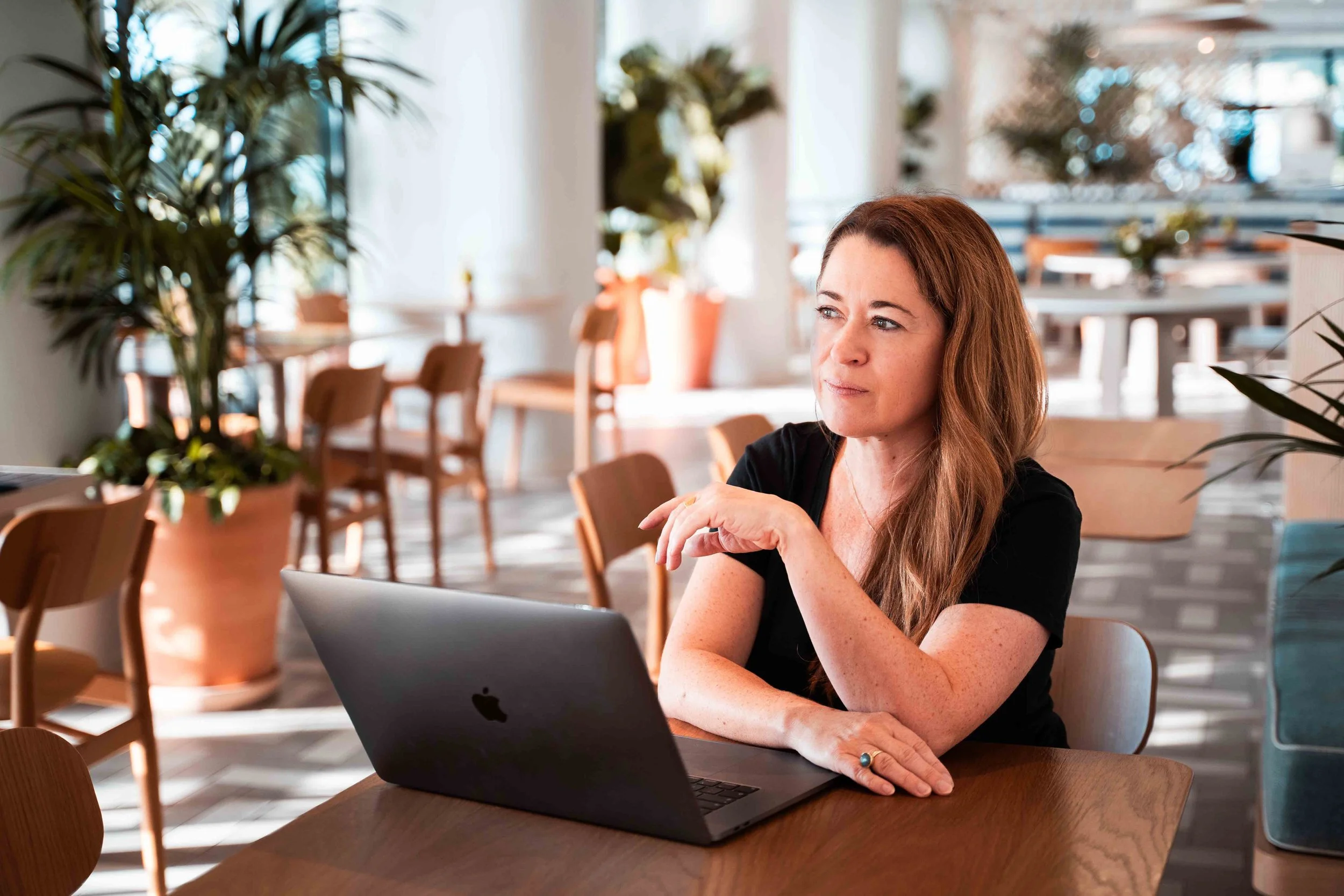
If you’re an AI expert, this probably isn’t for you. But if you’re curious about how I’m using AI to support my business — and especially my storytelling — then let’s crack on.
Back in January 2023, I started a part-time role as a content editor and project manager at an organisation focused on digital communications to build health literacy around sexual health. The work supported global efforts to end AIDS and achieve the Sustainable Development Goal for Health. The role involved the kind of purpose-led storytelling which is very much my jam, so I arrived on day one feeling excited and quietly confident.
And then we had a team meeting where I genuinely didn’t understand what anyone was talking about. And on day one, I didn’t have the guts to put my hand up and ask any questions (sigh). I cannot tell you how panicked I was! It was literally like being in a parallel universe – where I understood the words they were saying but just couldn’t get the context. Turns out they were discussing ChatGPT. The team had run an experiment: one writer created a blog post, and the same brief was given to ChatGPT. Both pieces were shared anonymously, and the team had to guess which was written by a human.
They got it wrong.
That moment definitely made me curious about the possibilities of AI – but it also freaked me out, was this the beginning of the end of human storytelling? Was my job at risk?
As a team, we cautiously started to explore AI and think through the ethics of using it. But during my two years there, I rarely used AI beyond summarising research or brainstorming ideas — I certainly never used it for writing articles. But over the last year, I’ve begun leaning into AI in a much more intentional way when it comes to my own business.
I’m not interested in becoming an AI expert and this post isn’t about shortcuts or automation. I’m a storyteller who understands the power of clarity, editing and iteration.
This post is about how I use AI as a co-editor, thinking partner and SEO assistant — while keeping my voice, values and creative integrity firmly intact.
With that context in mind, here’s the process I’m now exploring to support my digital brand storytelling with AI.
Step one: Get clear on your brand voice and foundations
Before you create any content — with or without AI — you need to be deeply clear on your:
• vision
• values
• audience
• tone of voice
• content strategy
If these foundations aren’t solid, AI won’t help — it will only amplify confusion.
This deep foundational work is what I guide people through in my brand clarity workbook and transformative personal branding power hour. Or if you’d prefer a light-touch start, I also have a free guide to growing your brand with soulful storytelling. Either way, clarity needs to come first.
Once you’ve done this work, you can feed it directly into your chosen AI platform by saying something like:
This is my brand guide. Use it to inform all future content we develop together.
This step is essential. It trains AI to understand not just what you do, but how you sound.
Step two: Write the story in your own words
Next, write the story.
How you do this is entirely up to you. Sometimes I write straight into Word. Other times, I journal longhand.
After journaling, I read my stream-of-consciousness pages aloud and use Word to transcribe them. Messy, human, imperfect — but 100% mined from my own creativity.
Step three: Use AI to shape a first draft
Share your initial thoughts with AI and give an instruction:
Help me organise these thoughts into a blog post of around 1,000 words. Remember to use my brand guide.
If you’re new to training AI, you’ll need to remind it of your tone more often. Over time, though, it begins to recognise your voice.
What comes back is not a finished piece — it’s a structured starting point.
Step four: Edit collaboratively (you + AI)
This is where you get down to really crafting your narrative. In this, AI supports the process; but it doesn’t replace your judgement or personality. It’s crucial that your tone of voice remains yours, and is consistent throughout.
At this stage, I go through the draft line by line — adjusting meaning, rhythm and cadence. I replace any words AI has introduced that don’t feel like me, stay alert to anything that sounds like generic AI, and use my own tools to sharpen what needs more edge.
Then I give it back to my AI editor with clear instructions, such as:
Review this to tighten the edit and ensure smooth flow and transitions between thoughts.
The more specific you are, the better the results – which is why step one is so important.
For example, you might say:
The purpose of this article is [insert your purpose], my audience is [describe audience] and I am publishing on [insert platform]. Keeping it true to my brand and tone of voice, review the article to ensure I am using active verbs where possible and there is good readability. I also want to make it a bit more concise/punchy/poetic/casual/professional etc.
It’s an iterative process — and I always do the final edit.
Step five: Use AI to strengthen SEO — without losing your voice
After my final edit, I return the piece to my AI editor and say something like:
I’m really happy with this. Can you review it from an SEO perspective and suggest where I could improve visibility for brand photography/content creation/brand films/storytelling mentoring?
I’ve shared below exactly what came back when I asked this after working on my last blog post, because it shows exactly how AI can support visibility without flattening your voice.
If SEO makes your eyes glaze over, feel free to skim. The key takeaway is simple: clarity and value beats keyword stuffing every time.
How my AI editor helped improve my SEO
AI editor response to improving SEO for my blog post Rhythm, Storytelling and Running a Creative Business Sustainably (excerpted):
This is a grounded, reflective piece. From an SEO perspective, you’re already doing a lot right: depth, originality, lived experience and clarity of values. SEO here isn’t about stuffing keywords — it’s about helping search engines understand what you do.
Key opportunities include:
• Clarifying early on that your work includes brand photography, brand films and storytelling mentoring
• Explicitly naming who you work with: women running purpose-led businesses
• Adding a small number of relevant keyword phrases naturally
• Using subheadings to improve scannability
• Strengthening internal links to services and your podcast
(excerpt end)
The response then went on to give me specific examples of where I could make the most of these opportunities.
If you’re familiar with SEO, none of this is revolutionary. But when you’re a one-woman band wearing every hat, it’s easy to publish and move on without those small strategic tweaks.
These light-touch changes significantly improve discoverability without compromising voice. Having AI hold me accountable on SEO — the bit I’m least interested in — is surprisingly valuable.
Will AI replace human storytelling?
So, coming back to the question I first had when encountering AI: will it replace human storytelling?
I can’t predict the future. Technology is evolving fast. But I don’t believe AI will replace human storytelling.
AI works best not as a replacement for creativity, but as a disciplined, intelligent support.
It allows me to work more sustainably, edit with greater clarity, and free up energy for the parts of storytelling that only humans can do: listening, feeling, noticing nuance and meaning.
If you’re a founder, creative or change-maker without a big team, AI can function like an editor in your pocket — as long as you stay in the driver’s seat.
Thinking back to that original experiment — the “human vs AI” blog post — it was technical. It explained how to use an HIV self-testing kit. Clear, procedural, instructional.
AI can synthesise. It can structure. It can optimise. But it cannot live a human life. It cannot gather memory, grief, contradiction and joy — and turn that into meaning.
Only we can do that.
And for me this is the interesting twist that I hadn’t anticipated when I first started worrying about AI taking my job.
In a world increasingly filled with AI-generated copy, lived experience becomes your competitive edge.
Your stories are the one thing no algorithm can replicate.
If you’re interested in getting support with your brand storytelling, I’d love to chat! You can find out the ways I can help in the Brand Stories section.
If you’re looking for some new brand photos full of soul and personality and want it to be a joyful experience then please get in touch at sarah@sarahoughton.co.uk
